Blog

  • Data I Am: PR/FAQ

    Data I Am: PR/FAQ

    The “PR/FAQ” documents are fictitious press releases. See details:

    This document outlines the vision, problem, and solution
    behind the founding of Data I Am.

    It is intended to be publicly shared to explain what we’re
    building and why it matters.

    Inspired by Jeff Bezos’ practice at Amazon, this is the
    fictitious press release we wrote in June 2024—
    before writing a single line of code.

    The product became publicly available in February 2025.


    📣 Press Release

    Data I Am Launches AI-Powered Data Loader for Salesforce

    San Francisco, CA — February 24, 2025 — Today test marks the launch of Data I Am, an AI-powered data loader purpose-built for Salesforce. Designed for Salesforce Admins and data professionals alike, Data I Am brings AI intelligence to the data loading process—automatically detecting common issues, suggesting intelligent fixes, and ensuring clean data is loaded into Salesforce.

    Salesforce Admins have long been frustrated that data loaders are just that—loaders. They’re forced to manually fix broken or messy data, often in spreadsheets, before even attempting to import it. Data I Am reimagines this workflow by providing an intelligent, supportive interface that streamlines both data cleanup and loading.

    “We’re reimagining the data loading experience from the ground up,” said Zeb Mahmood, co-founder of Data I Am. “No more manual cleanup. Just upload your messy CSV—and let our AI fix and load it for you.”

    Zeb brings over nine years of product leadership experience at Salesforce and two decades of building data platform products. His deep understanding of enterprise applications and integration pain points inspired the creation of Data I Am.

    Customer feedback has already been enthusiastic.

    “I used to spend hours cleaning data in Excel just to get it ready for a Salesforce import. Now I just toss the CSV into Data I Am, and it does the fixing for me. What used to be a painful chore is now a quick, confident step,” said Jessica Lin, Salesforce Admin at AcmeTech.

    “Having clean, accurate data in Salesforce is a game-changer for our pipeline health and forecasting accuracy. Data I Am gives me confidence in the numbers we’re reporting upstream,” said Raj Mehta, CRO at Cresthill Systems. “Once the data is in Salesforce, it’s 100x more expensive to clean. Data I Am is our gatekeeper for good data!”

    This ability to save hours of manual cleanup work is where Data I Am delivers its biggest value. Admins can now focus on delivering business value instead of wrangling spreadsheets and VLOOKUPs.

    Try Data I Am for free at https://dataiam.com—no credit card required. You can sign in using your Salesforce credentials (SSO supported) and get started in minutes.


    Key Features

    Here’s what sets Data I Am apart from traditional data loaders:

    • Auto-detects target object and fields based on your CSV—even if headers are missing or incorrect
    • Fixes malformed CSVs, like addresses crammed into a single column
    • Suggests intelligent fixes for invalid picklist values, incorrect formats, and more
    • Fetches missing Record IDs using match fields—no need for Excel VLOOKUPs
    • Normalizes values based on field type (e.g., for Revenue field, $100M → 100000000.00)
    • Lets you preview fixes before loading into Salesforce
    • Supports SSO login with your Salesforce ID—no extra logins to manage
    • Free to use, with no credit card required

    FAQ

    What is Data I Am?

    Data I Am is an AI-powered data loader purpose-built for Salesforce. Unlike other data loaders, it helps users fix the data before loading—no engineering skills required.

    Who is it for?

    Data I Am is designed for Salesforce Admins and non-engineering users who regularly deal with data import/export tasks, as well as for data professionals who want to save time on cleanup. Our primary persona is “Alex Smith,” a Salesforce Admin who juggles multiple data tasks without writing code.

    Why are you building this?

    Because current tools are just loaders. But in reality, every CSV is messy in its own way, and the Admin is often left to clean up that mess before loading the data. We believe the loading experience should have fixing of data built-in; it should be intelligent, contextual, and supportive—just like a good assistant. And more importantly, it should save users hours of spreadsheet wrangling and guesswork every time they prepare a file.

    Fixing data before it enters Salesforce is not just more efficient—it’s essential. Once bad data is loaded, the cost to detect and fix it skyrockets. Broken flows, inaccurate dashboards, failed automations, and degraded user trust all stem from poor data hygiene. In the age of AI, accurate and timely data is everything—because AI is only as good as the data it learns from and operates on.

    What’s next?

    Salesforce is the first ecosystem; we’ll be building AI-powered data loaders for ServiceNow, NetSuite, Workday, and many more.


    To learn more or sign up: https://dataiam.com

    Zeb Mahmood

    Zeb Mahmood CoFounder & CEO Data I Am, Inc.

  • Case of Missing Record IDs

    Case of Missing Record IDs

    If you’ve ever been asked to mass update Salesforce records, you’ve likely run into The Record ID Problem.

    It goes like this:

    • A business team sends you a spreadsheet full of updated Salesforce data
    • You’re the Salesforce Admin or Analyst expected to upload it
    • But the spreadsheet? It doesn’t have Record IDs—and Salesforce Bulk API requires them for updates

    Why Spreadsheets Are Often Missing Record IDs

    People love working in Excel or Google Sheets. It’s fast, flexible, and familiar.

    Here’s a real-world example:

    A Marketing Manager downloads lead records from Salesforce, enriches them with firmographic data from a third-party source, and sends you the updated spreadsheet. Now they want you to push those updates back to Salesforce.

    But there’s a problem: the Record IDs are missing.

    To fix this, most Salesforce Admins have to:

    • Export the Lead object from Salesforce, including Record IDs
    • Manually insert the retrieved IDs into the original file i.e. use Excel’s VLOOKUP to match on a unique field like Email or Cell Phone

    This problem is so common that Salesforce Support even published a video tutorial: How to Prepare Your CSV File Using Vlookup in Excel

    How Data I Am Solves It

    Let’s say you get a spreadsheet from Marketing with updated Lead data—but no Record IDs.

    Here’s what happens in Data I Am, our AI-powered Fix & Load tool:

    1. Create an Update job and upload the spreadsheet 
    2. Data I Am’s AI auto-detects the target object e.g., Lead
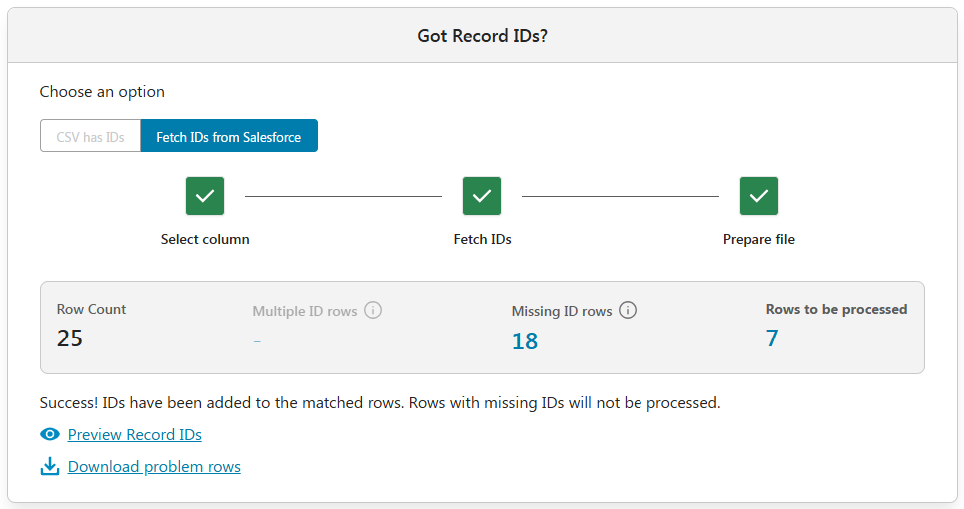
    3. Next, choose an option:
      • “CSV has IDs” , or
      • “Fetch IDs from Salesforce”
    4. If you choose to fetch IDs, simply select a match column (e.g., Cell Phone), and Data I Am will retrieve and insert the corresponding Record IDs directly into your file.

    During the match process, Data I Am flags:

    • Multiple ID rows – where the match column returns more than one record in Salesforce
    • Missing ID rows – where no matching record is found

    Then you simply run the job. Done. ✅

    Optionally, Data I Am lets you:

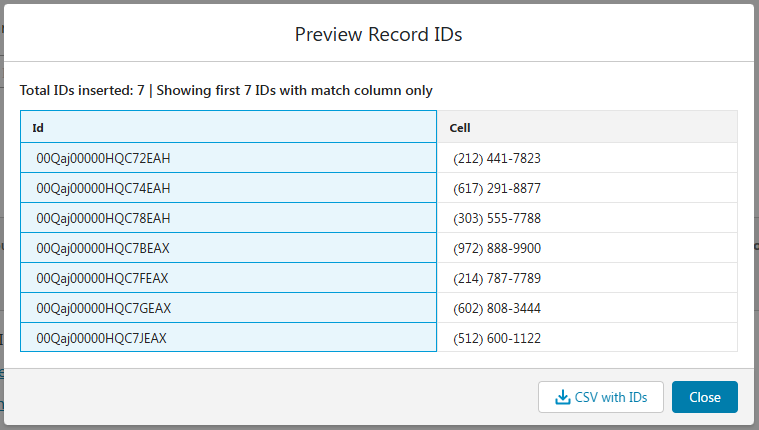
    • “Preview Record IDs” and download the enriched “CSV with IDs”.
    • “Download problem rows” file with multiple or missing IDs for further review.
    • On the “Data Fixes” screen, AI automatically identifies and corrects common issues. For example: If a column like Revenue contains non-numeric formats (e.g., "$100M" or "USD20,000"), they are normalized to standard numeric values (100000000.00 and 20000.00).

    Isn’t that magical! R.I.P., Excel VLOOKUP!


    TL;DR

    Salesforce Bulk API requires Record IDs to update records. But spreadsheets from business users often don’t include them. Data I Am fixes that—automagically.

    ✅ Fetches missing Record IDs
    ✅ Cleans messy spreadsheets before loading
    ✅ Handles edge cases e.g., rows that match multiple IDs


    Try It Free

    👉 dataiam.com
    📩 Or email our co-founder Zeb at TryNewThings@dataiam.com for a live walkthrough.


    About the Author

    Zeb Mahmood has spent his career unlocking business value by moving, fixing, and loading data—first as an engineer, then as a product leader, and now as a cofounder.

    With 2 decades in product management, 9 years at Salesforce, and hands-on experience in early-stage startups, he’s learned a simple truth: data is the lifeblood of every business. But when it’s messy or trapped in spreadsheets, it can’t drive impact.

    That’s why Zeb cofounded Data I Am — a Fix & Load AI built for Salesforce Admins and data handlers who just want their data to work. No frustration. No failed imports. Just clean, reliable data that loads seamlessly into Salesforce and delivers results.

    Zeb believes great products don’t win on tech alone — they win through empathy. Empathy for users, buyers, partners, and the people building the product every day.

    Zeb Mahmood

    Zeb Mahmood CoFounder & CEO Data I Am, Inc.

  • Now Querying: Related Objects

    Now Querying: Related Objects

    Let’s be honest—querying related objects in Salesforce isn’t exactly fun.

    If you’ve ever tried pulling a report of Opportunities along with Account names and the Owners’ aliases, you’ve probably ended up with multiple browser tabs open for SOQL dot notation help, a couple of manual VLOOKUPs, and maybe even a silent prayer.

    We’ve been there. So we made it better.

    We’re thrilled to announce a major upgrade to our Extract functionality (a.k.a. Salesforce Query Builder) in Data I Am:

    You can now query related objects in Salesforce—with just a few clicks!

    What Are Related Objects in Salesforce?

    Salesforce data is stored in a web of related objects—like linked database tables. A few examples:

    • A Contact belongs to an Account
    • An Opportunity is tied to both an Account and an Owner
    • A Case links to a Contact and an Account

    Also see: Object Relationships Overview by Salesforce


    How to Query Related Objects with Data I Am

    Until now, if you wanted to export data with related fields, you had to export one object at a time, merge them in Excel using VLOOKUP, and hope nothing breaks.

    But now you can: choose your base object, then select related fields across related objects—visually and with zero SOQL (yes, no guessing the dot-notation syntax).

    ✅ Select any standard or custom Salesforce object
    ✅ Browse related objects and pick the fields you want
    ✅ Preview your result set before full extraction

    It’s clean, intuitive, and designed for Salesforce admins, analysts, and consultants who just want the data—without the SOQL and spreadsheet drama.

    ⚠️ Like native SOQL and most third-party tools, you can go up the relationship chain — from child to parent (e.g., Opportunity → Account → Owner). However, you can’t yet go down (e.g., Account → all Contacts). We’re working on a way to support that for you — even though SOQL itself doesn’t natively allow it.

    Example: Query Related Salesforce Data

    Let’s say your manager asks for a list of open Opportunities that includes:

    • Opportunity Name
    • Account Name
    • Owner’s Alias

    In Data I Am, just:

    1. Select the Opportunity object and the Name field
    2. From Related Objects:
      • Choose Account → Name
      • Choose Owner → Alias
    3. See the auto-generated SOQL:
      SELECT Name, Account.Name, Owner.Alias FROM Opportunity
    4. Preview result set → Run job → Done!

    Also see the blog post: Visual Query Builder

    Modern Data I Am vs. Clunky Old Data Loaders

    With this latest enhancement, Data I Am is now more functionally capable than any leading data loader in the market. (Not bragging — just stating the facts.)

    Unlike traditional tools, Data I Am includes smart, AI-powered capabilities like:

    ✅ Flagging and fixing invalid picklist values
    ✅ Fetching missing Record IDs
    ✅ Correcting inconsistent data formats
    ✅ Previewing (and downloading) cleaned data before loading

    Want to see how Data I Am compares to Salesforce Data Loader (desktop) and MuleSoft dataloader.io? Check out our side-by-side feature comparison — a.k.a. the “truth table” — right here: https://dataiam.com/#data-loaders-side-by-side 


    ✅ TL;DR

    You can now query related objects in Salesforce using the Data I Am Query Builder—a visual, no-code way to quickly extract Salesforce data from related objects.

    No SOQL scribbling → SOQL with dot notation is generated for you

    No VLOOKUP dance → Select related fields visually

    No trial-and-error guessing → Preview the result set before exporting


    Try it FREE at: dataiam.com
    Or email our co-founder, Zeb, at TryNewThings@dataiam.com for a live walkthrough.


    About the Author

    Zeb Mahmood has spent his career unlocking business value by moving, fixing, and loading data—first as an engineer, then as a product leader, and now as a cofounder.

    With 2 decades in product management, 9 years at Salesforce, and hands-on experience in early-stage startups, he’s learned a simple truth: data is the lifeblood of every business. But when it’s messy or trapped in spreadsheets, it can’t drive impact.

    That’s why Zeb cofounded Data I Am — a Fix & Load AI built for Salesforce Admins and data handlers who just want their data to work. No frustration. No failed imports. Just clean, reliable data that loads seamlessly into Salesforce and delivers results.

    Zeb believes great products don’t win on tech alone — they win through empathy. Empathy for users, buyers, partners, and the people building the product every day.

    Zeb Mahmood

    Zeb Mahmood CoFounder & CEO Data I Am, Inc.

  • Visual Data Fixes

    Visual Data Fixes

    Don’t just imagine how your data will look after you apply fixes. See it — before you load.

    If you’ve used any Salesforce data loader — whether it’s Salesforce’s own tools (like Salesforce Data Loader or MuleSoft dataloader.io) or third-party options like Informatica or Jitterbit — you know the routine: upload a CSV, map fields, apply data transforms, hit load, and hope everything works.

    What’s missing? Visibility. These tools don’t show you how your data will actually look after data transforms are applied. 

    That’s where visual data fixes come in — only from Data I Am.

    What Makes It Visual?

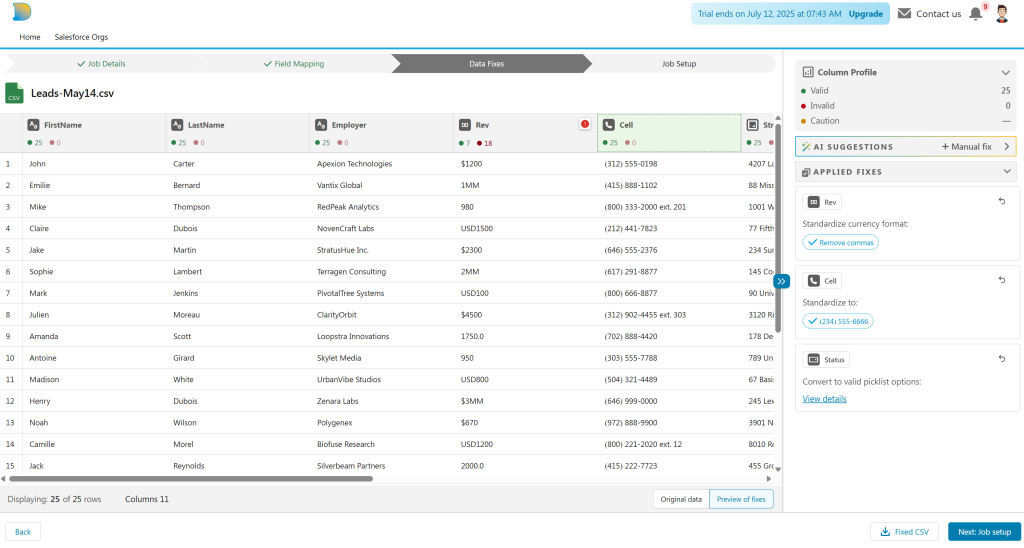
    The magic happens on the Data Fixes screen.

    After you upload your spreadsheet or CSV, Data I Am does a column-by-column health check. You see how many values are valid, and which ones need fixing. For the invalid ones, AI steps in to help — suggesting fixes (aka data transforms) that are specific to your Salesforce org’s schema; including custom fields and objects.

    Examples of AI-suggested fixes include:

    • Converting invalid picklist values
    • Standardizing phone numbers
    • Fetching missing Record IDs for update jobs

    And here’s the best part, the visuals: you see the data change right in front of you — before anything is sent to Salesforce. No guesswork. No risky trial runs. Just clarity.

    You can toggle between “Original data” and “Preview of fixes” tabs to compare before-and-after values. You can even download the cleaned file before you move forward.

    It’s a What You See Is What You Get (WYSIWYG) approach to Salesforce data — finally.

    More Than a Data Loader

    Even if visual data fixes were all we offered, it would make Data I Am worth using. But there’s much more under the hood:

    • Insert, update, upsert, delete, and extract jobs
    • AI-powered field mapping — even when your spreadsheet has no headers
    • Visual SOQL query builder with result-set preview
    • Smart V-Lookup (coming soon!) — think VLOOKUP function of spreadsheets, but purpose-built for Salesforce data loading use cases

    Try It Free

    Experience a new way to fix and load Salesforce data.
    👉 Sign up for free

    Have suggestions? Something you’d love to see?
    📬 Email us at TryNewThings@dataiam.com


    About the Author

    Zeb Mahmood has spent his career unlocking business value by moving, fixing, and loading data—first as an engineer, then as a product leader, and now as a cofounder.

    With 2 decades in product management, 9 years at Salesforce, and hands-on experience in early-stage startups, he’s learned a simple truth: data is the lifeblood of every business. But when it’s messy or trapped in spreadsheets, it can’t drive impact.

    That’s why Zeb cofounded Data I Am — a Fix & Load AI built for Salesforce Admins and data handlers who just want their data to work. No frustration. No failed imports. Just clean, reliable data that loads seamlessly into Salesforce and delivers results.

    Zeb believes great products don’t win on tech alone — they win through empathy. Empathy for users, buyers, partners, and the people building the product every day.

    Zeb Mahmood

    Zeb Mahmood CoFounder & CEO Data I Am, Inc.

  • Visual Query Builder

    Visual Query Builder

    Salesforce users have long sought easier ways to build Salesforce Object Query Language (SOQL) queries. Feature requests like this IdeaExchange post highlight the demand for a query builder that’s more usable and intuitive.

    While Salesforce does offer tools like the Query Editor, they come with several limitations:

    • Limited or no support for browsing custom objects or fields
    • No visibility into field data types or relevant operators
    • Limited or no support for related objects
    • No generation of date literals for date/datetime fields

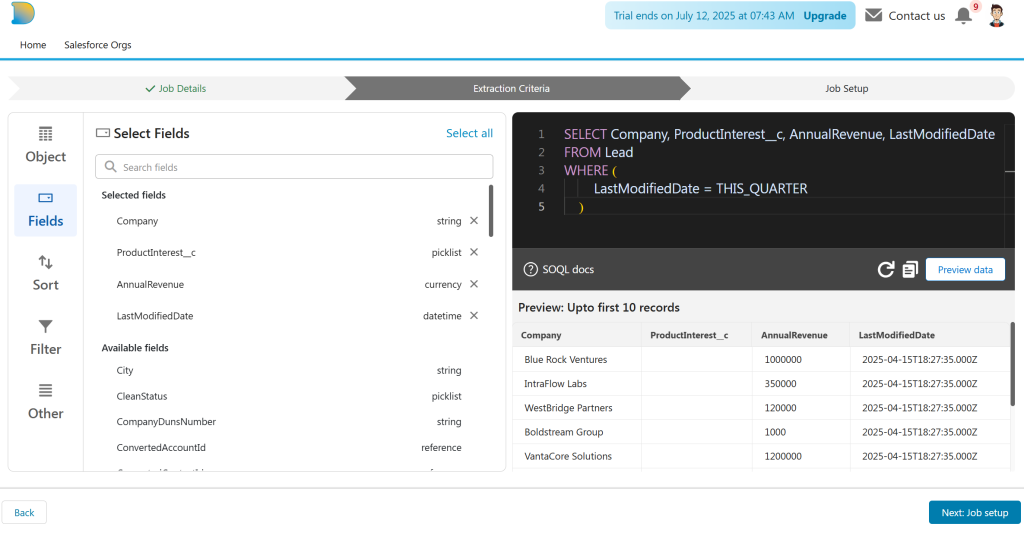
    Data I Am addresses these gaps with a no-code SOQL query builder, available at app.dataiam.com.

    Generate SOQL Queries with Confidence

    Data I Am offers a visual query builder designed for Salesforce admins and business users who want to build valid, reliable SOQL queries—without handwriting SOQL.

    Key capabilities:

    Browse standard and custom objects

    Explore objects and fields—both standard and custom—through a clean, point-and-click interface.

    Data type–aware filtering

    Only relevant operators are shown based on each field’s data type. For example:

    • =, <, > for numeric fields
    • CONTAINS, STARTS WITH, ENDS WITH for text fields

    Date literal support

    For date fields like LastModifiedDate, the builder presents Salesforce-supported date literals such as YESTERDAY, LAST WEEK, LAST QUARTER, and more—removing the need to look up syntax.

    Relationship navigation

    Easily access fields from related objects (e.g., pulling Contact fields while querying Account records).

    Syntax Validation

    Perform client-side SOQL syntax validation before submitting the query to Salesforce; avoid unnecessary API errors or quota waste.

    Data Preview

    Preview the result set before executing full query.

    Part of a Feature-Rich Data Loader

    The query builder is part of the broader Data I Am platform, which also includes:

    • Insert, update, upsert, and delete operations (lookup coming soon)
    • AI-powered field mapping between CSV columns and Salesforce fields
    • CSV file restructuring to enable 1-to-1 column-to-field mappings
    • Automated data fixes for invalid picklist values, missing Record IDs, and formatting errors

    Together, these capabilities allow non-engineers (e.g. Salesforce administrators) to handle complex data loads and extracts—filling important functionality gaps left by native Salesforce Data Loader and many third-party tools.

    Try It and Tell Us What You Think

    Data I Am is continuously evolving based on user feedback. Have suggestions or feature requests? Reach out at TryNewThings@dataiam.com.

    To try the query builder, sign up for free access →


    About the Author

    Zeb Mahmood has spent his career unlocking business value by moving, fixing, and loading data—first as an engineer, then as a product leader, and now as a cofounder.

    With 2 decades in product management, 9 years at Salesforce, and hands-on experience in early-stage startups, he’s learned a simple truth: data is the lifeblood of every business. But when it’s messy or trapped in spreadsheets, it can’t drive impact.

    That’s why Zeb cofounded Data I Am — a Fix & Load AI built for Salesforce Admins and data handlers who just want their data to work. No frustration. No failed imports. Just clean, reliable data that loads seamlessly into Salesforce and delivers results.

    Zeb believes great products don’t win on tech alone — they win through empathy. Empathy for users, buyers, partners, and the people building the product every day.

    Zeb Mahmood

    Zeb Mahmood CoFounder & CEO Data I Am, Inc.

  • Data I Am — Product Roadmap

    Data I Am — Product Roadmap


    Since launching Data I Am, we’ve focused on doing one thing really well: loading data into Salesforce with confidence. We’ve helped users move faster and trust their data more — with zero code.

    What’s Available Today

    Data I Am already offers a robust set of features that empower users to fix and load data with ease:

    • Insert, update, upsert, and delete records in Salesforce (Sales Cloud, Service Cloud, and all Salesforce platform clouds)
    • Extract data using our visual SOQL query builder
    • Fix invalid data with just a few clicks — including picklist mismatches and formatting errors
    • Update records even when Record IDs are missing

    What’s on the Roadmap

    We’re excited to share what’s on our roadmap. We’re building the most effortless, yet powerful data loader for Salesforce. The roadmap reflects the voice-of-the-customer and our own innovation ideas. Items are not listed in order of priority.

    • Conversational UI: Just chat with your data loader e.g., “Load this file over the weekend”
    • Self-Healing Mappings: Automatically fix outdated or broken field mappings
    • Usage Metrics: Track numbers of product usage e.g., records fixed, loaded, and enriched
    • Formula Fields: Create values for fields based on formulas
    • Smart Lookups (smarter alternative to the dreaded VLOOKUPS):
      • Simulate JOIN operation between rows in source file and records in Salesforce with support for AND and OR logic
      • Choose between exact, partial, fuzzy, or value-equivalent match types
    • Data Enrichment: Enrich with data from D&B, Reuters, LinkedIn, and other third-party sources
    • Data Verification: Verify street addresses, business names, web-domains, etc
    • Toggle Validation Rules: Turn validation rules off during loads — and back on automatically
    • Rollbacks: Undo a bad job
    • Personally Identifiable Information (PII) Redaction: Automatically mask sensitive info e.g., Email addresses
    • Data Migrations: Move data between Salesforce orgs intelligently
    • File Formats: Microsoft Excel and Google Sheets
    • Data Sources: Google Drive, Microsoft OneDrive, AWS S3, SFTP, Snowflake, Databricks, etc
    • API: Access product via API — plug Data I Am into your workflows
    • Salesforce AppExchange: Deploy Data I Am natively as a Salesforce Managed Package
    • Grow Salesforce Ecosystem: Integration with Slack, Agentforce, Commerce Cloud, Industry Clouds (Health Cloud, Financial Services Cloud, etc), Data Cloud, Tableau, and Marketing Cloud
    • Grow Beyond Salesforce: HubSpot, ServiceNow, NetSuite, Workday, Adobe Marketing Cloud, and many more enterprise SaaS apps
    • Accessibility: Improve accessibility with WCAG 2.0 compliance
    • HIPAA, SOC 2 and FedRAMP compliance
    • Idea Exchange: Suggest new features, upvote existing ideas, and see what’s planned

    Final Thoughts

    Our goal is simple: take the pain out of fixing and loading data.

    Everything on this roadmap is inspired by conversations with users like you. Whether you’re loading millions of records or fixing a single broken CSV, we want to help you move faster, with less friction, and more confidence.

    Have an idea or a feature you’d like us to prioritize? We’d love to hear from you — email us at TryNewThings@dataiam.com.

    ⚠️Safe Harbor

    This blog post outlines our current product vision and roadmap. It is intended for informational purposes only and should not be relied upon when making purchasing decisions. The development, release, and timing of any features remain at our sole discretion and are subject to change.


    About the Author

    Zeb Mahmood has spent his career unlocking business value by moving, fixing, and loading data—first as an engineer, then as a product leader, and now as a cofounder.

    With 2 decades in product management, 9 years at Salesforce, and hands-on experience in early-stage startups, he’s learned a simple truth: data is the lifeblood of every business. But when it’s messy or trapped in spreadsheets, it can’t drive impact.

    That’s why Zeb cofounded Data I Am — a Fix & Load AI built for Salesforce Admins and data handlers who just want their data to work. No frustration. No failed imports. Just clean, reliable data that loads seamlessly into Salesforce and delivers results.

    Zeb believes great products don’t win on tech alone — they win through empathy. Empathy for users, buyers, partners, and the people building the product every day.

    Zeb Mahmood

    Zeb Mahmood CoFounder & CEO Data I Am, Inc.

  • Enterprise UX That Just Clicks

    Enterprise UX That Just Clicks

    This story is about designing UX for an enterprise app that feels effortless and delightful. It’s the story of Data I Am — an AI-powered data loader for Salesforce.

    Why a Salesforce-Specific Data Loader?

    In Story of a Salesforce-specific Data Loader, I explained why the world needed one. TL;DR: generic ETL tools handle complex integrations, but that flexibility comes at a cost — bloated menus with options, endless functions, and dials, 90% of which aren’t needed when all you want is to load a messy spreadsheet into Salesforce.

    Target User Persona

    Meet Alex Smith — the Salesforce Admin. He wants to load messy spreadsheets quickly and confidently into Salesforce.

    MuleSoft, a popular ETL tool, for example, even hosts workshops just to teach users how to use it. Alex doesn’t have time to learn to drive an 18-wheeler just to run an errand. He just needs simple, reliable spreadsheet-to-Salesforce loading.

    The Experience Starts With the Website

    Great user experience begins at first touch. Our website is self-explanatory, with demo video, animated GIFs to highlight key capabilities, and frictionless self-service signup. All the info needed to get started is right there — no “Call for Pricing” buttons, no barriers.

    Deciding How Users Interact

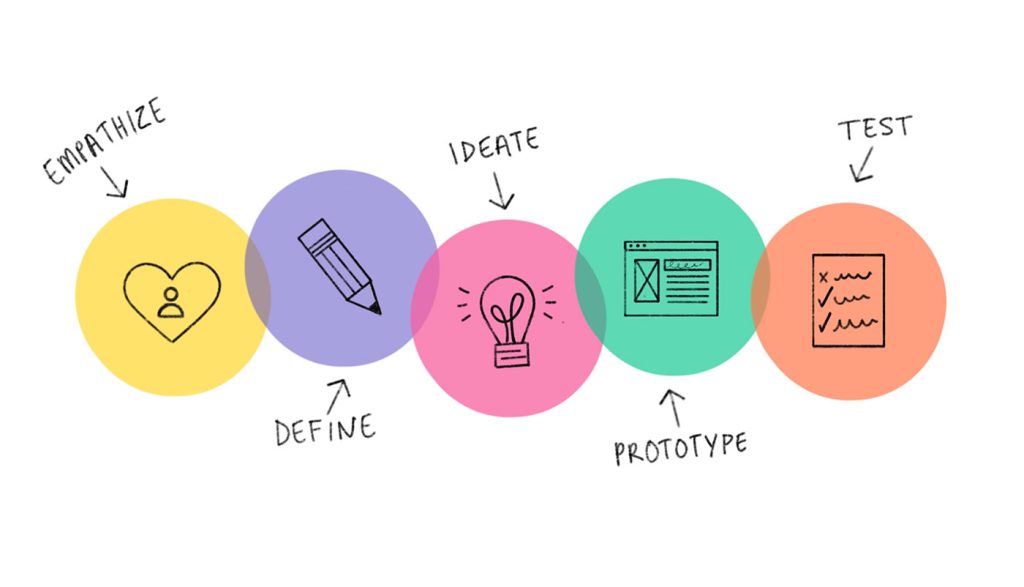
    Once we knew we had to build a Salesforce-specifc data loader, we had the why, next, we had to solve the how. We followed an iterative, Design Thinking approach, collaborating internally and with design partners.

    Initially, we considered a conversational UI:

    Prompt: “Fix and load my data”

    Fun in theory. But in practice? Meh. Typing a prompt and checking if AI did what you wanted takes time. We scrapped it. Instead, the heavy lifting happens in the background, and users see clean, AI-tested suggestions.

    Our guiding question: how do you design powerful enterprise software that users can just click through — no typing required?

    Just Clicks

    The vision was clear: Data I Am couldn’t look like a conventional ETL tool. No formulas. No scripts. No 50-step data pipelines. Just effortless data loading.

    Every cell in a spreadsheet is analyzed, bad data is flagged and fixed, fields are mapped to Salesforce, missing Record IDs are filled, the preview is displayed, and the job is scheduled — all with just a click.

    Keeping the User Informed

    The experience doesn’t stop when the data job runs. After a job completes, in-app notifications and emails inform users how it went, highlight any issues, and suggest quick corrective actions. Coming soon: a monitor showing the value Data I Am delivers — records uploaded, missing IDs retrieved, invalid values corrected — all at a glance.

    User Reactions

    I was talking to a Salesforce Admin — no slides, no pitch — I just opened our website. A few minutes in, I said:

    “Let me show you how to sign up…”

    The Admin replied:

    “Actually, I’m already in. The signup was easy…”

    By the time we finished talking, he was exploring the tool. That’s click-first UX in action.

    Making a simple UX for enterprise app is hard — but gratifying when you see delight on customers’ faces.

    Key Elements of Data I Am UX

    • Familiarity — built on Salesforce Lightning Design System (SLDS) for instant recognition because our target user is a Salesforce Admin.
    • Usability — spreadsheet-like interface for intuitive interaction.
    • No guesswork — WYSIWYG preview for every data fix. No surprises.
    • End-to-end delight — experience starts with the website, continues during the data fixing and loading, and post-job notifications keep users informed.

    Experience for Yourself

    The best proof of good UX? Experiencing it yourself. Upload a messy spreadsheet, watch Data I Am flag and fix bad data, preview the fixed data, and run your job effortlessly.

    See how we’ve designed both app and website to delight Salesforce Admins. Click-first UX, intelligent AI fixes, and frictionless self-service mean anyone can get started in minutes.

    Experience it now: https://dataiam.com

    About the Author

    Mueed Ur Rehman is the Lead Product Designer for Data I Am. With a BS in Computer Science and over 5 years of experience in UX/UI design, he brings a passion for crafting intuitive, user-centric digital experiences. Mueed specializes in user research, wireframing, prototyping, and visual design, and thrives in collaborative, cross-functional teams. He is a proud employee ofArbisoft — a global software engineering firm and trusted partner to Data I Am.

    Mueed Ur Rehman

    Mueed Ur Rehman Sr. Product Designer Arbisoft

  • Why a Salesforce-specific data loader?

    Why a Salesforce-specific data loader?

    In our last post, we explained why ETL and iPaaS aren’t substitutes for Salesforce-specific data loaders. They’re designed for “any-to-any” integration—and require enterprise engineers to build and maintain them.

    Today, let’s talk about the opposite kind of product—one built just for Salesforce. Designed so well, it feels effortless.

    Data I Am: Master of one

    When we set out to build Data I Am, we made a conscious decision:

    • One source — spreadsheet/CSV
    • One destination — Salesforce
    • One target user — the Salesforce Admin

    That’s it.

    We didn’t want to solve every data problem. We wanted to solve one problem phenomenally well—making life better for the people who keep Salesforce running.  Salesforce Admins are technical, often certified, and deeply familiar with their org. But asking them to build complex ETL pipelines just to load a CSV? That’s not a great use of their time. They’re already juggling: System maintenance, user management, dashboards and reports, and automations and workflows.

    Spreadsheets are messy. We embrace that.

    Real-world spreadsheets rarely come clean. They usually look like this:

    • Columns in random order with missing or unclear headers
    • Mixed values like “$100K” and “USD 200M” for numeric (currency) fields
    • Invalid picklist values
    • Empty required fields
    • Missing Record IDs (for update jobs)

    Instead of forcing admins to clean the data beforehand—or learn dozens of transformation rules—Data I Am uses AI to do the fixing. Automagically. 🪄

    But this isn’t generic AI. It’s tuned for Salesforce.

    Here’s what Data I Am does:

    • Understands the data in each column—even without headers
    • Maps each column to the correct Salesforce field
    • Reads your Salesforce org’s metadata (picklist options, data types, required fields)
    • Suggests fixes like:
      • Stripping currency symbols and normalizing numbers
      • Converting invalid picklist values
      • Fetching missing Record IDs
    • Shows a real-time preview of the fixed data

    You stay in control—choose data fixes to apply. We believe users still want human oversight (for now)

    Focus wins

    Data I Am doesn’t try to do everything. It’s a tool purpose-built for Salesforce Admins—it fixes your spreadsheet so it’s ready not just for any Salesforce instance, but specifically for your Salesforce org.

    Our users—Salesforce Admins, RevOps leads, and Marketing Ops teams—tell us it’s a game changer.

    Because when the data is right:

    • Reports are accurate
    • Workflows behave
    • Users trust the system

    Until next time: If you’ve ever cursed at a CSV file, come see what we’ve built.
    👉 dataiam.com

    Zeb Mahmood

    Zeb Mahmood Co-founder CEO Data I Am, Inc.

  • ETL ≠ Data Loader

    ETL ≠ Data Loader

    Let’s say you’re at a company that uses Salesforce, and someone asks:

    “Wait, don’t we already have ETL (or iPaaS)? Why do we need another tool to load data into Salesforce?”

    A totally fair question. There are powerful ETL and iPaaS platforms that have been solving complex data problems for years. But here’s the thing: they were built for something else.

    ETL/iPaaS: Jack of all trades

    blog-img

    These platforms are designed to move data between just about anything—databases, cloud services, APIs, files—no matter the format or protocol. They come packed with hundreds of connectors and transformation rules.

    They’re the Swiss Army knives of enterprise integration. Perfect when you’re syncing Workday to Salesforce every week, with a consistent file format and a locked-in mapping. But what if your day looks more like this?

    • “Hey, can you load this lead list from this morning’s webinar?”
    • “Can you update 20K cases in Service Cloud with this spreadsheet I triaged? Oh, and I forgot to include Record IDs—you can VLOOKUP them in.”

    That’s the kind of chaos Marketing Ops managers and Salesforce Admins deal with every day. And that’s exactly where a different kind of tool shines.

    Data I Am: Master of one

    Data I Am is an AI-powered data loader, purpose-built for Salesforce. Where ETL tools are built for repeatable, engineered pipelines, Data I Am is built for one-off, messy jobs that need to be done right now.

    It’s designed to:

    • Require zero code, zero prompt engineering
    • Fix messy spreadsheets and make them Salesforce-ready

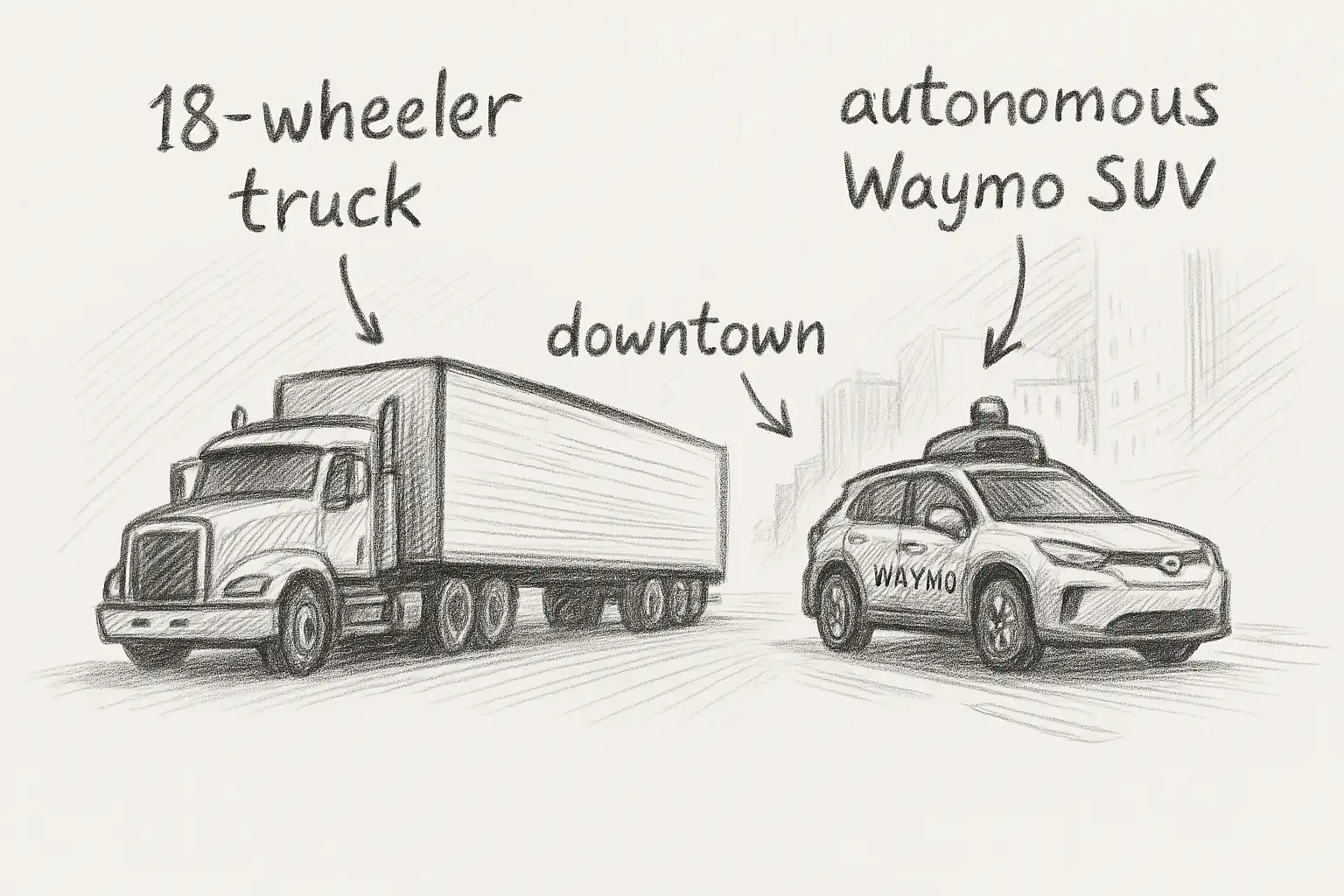
    It’s like taking an 18-wheeler truck (ETL/iPaaS) into downtown—powerful, but unwieldy—versus hopping into an autonomous Waymo SUV (Data I Am) that gets you there effortlessly.

    TL;DR:

    ETL/iPaaS = Jack of all trades
    Data I Am = Master of one: Fixing and loading Salesforce data

    In our next post, we’ll show how Data I Am tackles these challenges—with a little help from AI.

    Zeb Mahmood

    Zeb Mahmood Co-founder CEO Data I Am, Inc.

  • Using War Jargon at Work?

    Using War Jargon at Work?

    Ever been in a war room trying to come up with a killer go-to-market strategy? Maybe your manager asked for a battle plan while you were still nursing your battle scars from the last product launch. Corporate-speak can get… intense. We’ve all heard (or said) things like:

    • “Let’s nuke the competition!”
    • “We need some serious ammo for this pitch”
    • “She’s a straight shooter”
    • “We’re in the trenches together”

    Sometimes it’s tossed around jokingly; other times, it’s just… reflex. It’s part of that unspoken dialect of business meetings, strategy sessions, and LinkedIn posts. But if you step back for a moment, it’s worth asking: Why does the language of work so often sound like the language of war?

    For Some, War Is Real

    For most of us, thankfully not. But for some—our colleagues, customers, and fellow humans —war isn’t a metaphor. It’s real. And ongoing. They’ve lived it, lost loved ones to it, or carry memories and scars that don’t fade when the quarterly numbers come in.

    So when we casually toss around phrases like “war chest”, “purple heart”,  or  “blitz”, it can hit harder than we intend. Not because we mean harm—but because we forget that language, like anything else, matters.

    Imagine sitting in a QBR meeting while quietly coping with the trauma of real war. Hearing your teammates describe Q2 sales as a “turf battle” might not land the way they think it does.

    We’re Trying to Unlearn

    I’ll be honest—I’ve definitely used this language myself after 2 decades in the corporate world. But over the past several years, I’ve made a conscious effort to unlearn it. Because words matter.

    At the startup I co-founded, Data I Am, we try to keep our language intentional, positive, and—most importantly—human. We don’t believe another vendor has to “lose” for us to “win the battle”. We can all succeed by focusing on what matters: helping customers succeed.

    blog-img

    Suggestions, If We May

    Here are some alternatives to lighten things up without losing your point:

    War-ish JargonNon-War AlternativeFun / Playful Alternative
    War RoomProject RoomCatalyst Room
    Hit the Ground RunningJumpstartLaunch Mode, Turbo Boost
    Battle PlanAction PlanGame Plan
    In the TrenchesHands-OnRolling Up Our Sleeves
    Nuke the CompetitionOutperformBBC: Be Better than the Competition
    Ammo for the PitchTalking PointsMic Drop Material
    Guerrilla MarketingScrappy MarketingLoCoHi Marketing: Low-Cost, High-Impact

    Still cool. Just a bit more… compassionate.

    Let’s Make Work Feel More Human

    Small changes in language can create space for more inclusivity, empathy, and respect. Especially in global, remote-first work cultures—where we don’t always know what our teammates have lived through—it pays to be thoughtful.

    Let’s make our workspaces more inclusive, intentional, and respectful of all the life experiences people carry with them.

    Zeb Mahmood

    Zeb Mahmood Co-founder CEO Data I Am, Inc.